

Photo taken by: PKPA
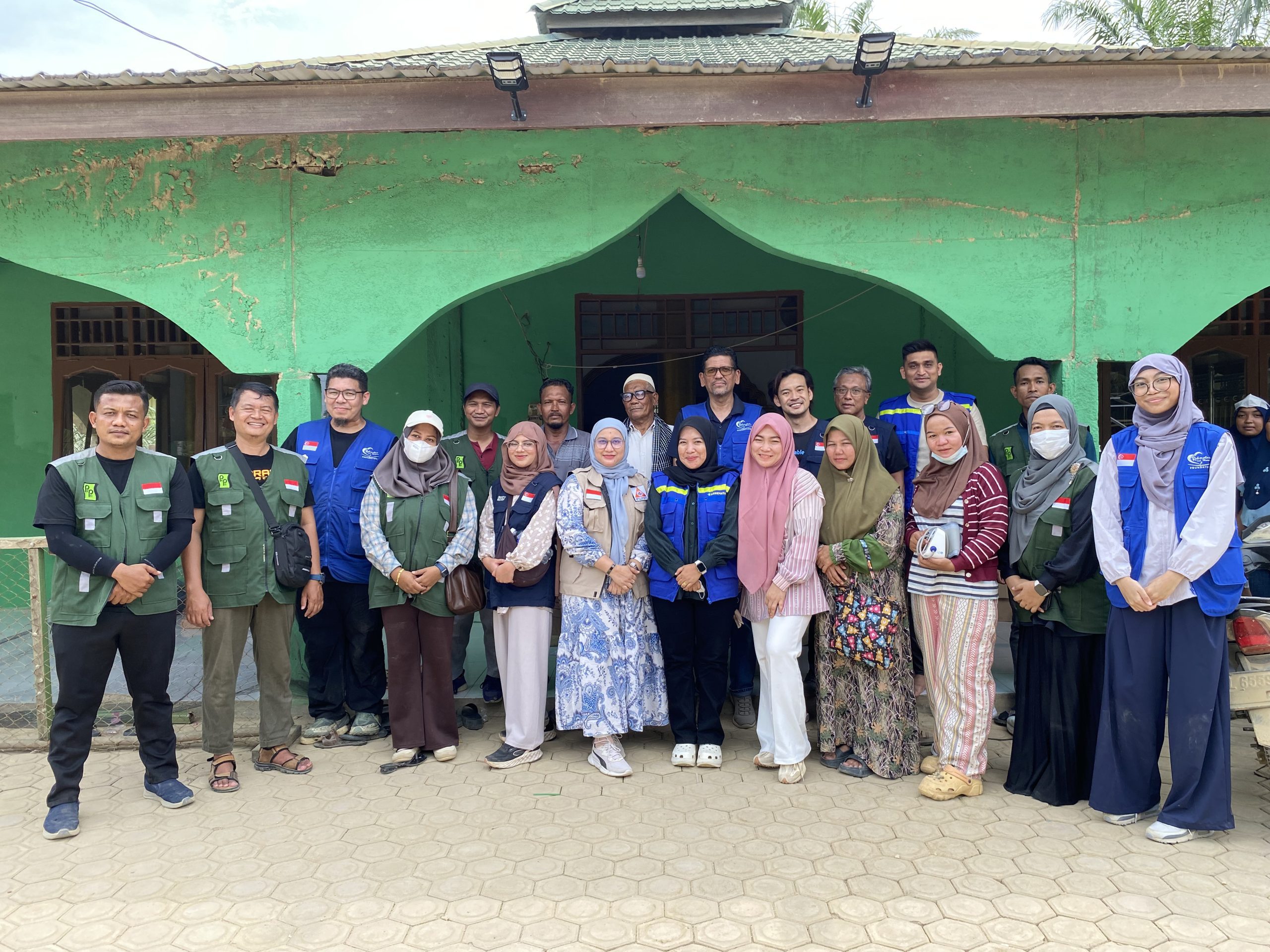
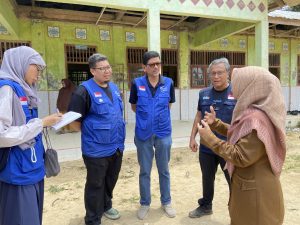
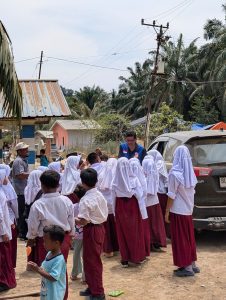
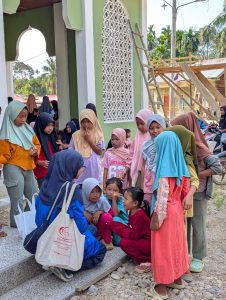
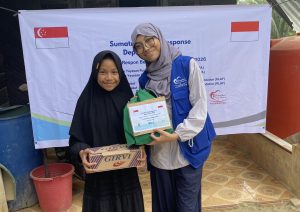
RLAF and Mercy Relief team on-ground at local school in Sulum Village, Aceh Tamiang
RLAF conducted a monitoring visit to Aceh Tamiang, in Sumatra, Indonesia from 26th April to 30th April 2026, as part of the Asian Emergency Floods Relief 2025. This is to support due diligence, transparency and accountability to the donor community, and to strengthen operational coordination with key humanitarian partners. The visit engaged Mercy Relief and onground partner, Pusat Kajian dan Perlindungan Anak (PKPA) to review planned utilisation of funds, observe relevant operational touchpoints, and discuss evolving needs and potential areas for further support in Sumatra’s recovery and relief efforts.
Background
In late November and early December 2025, prolonged heavy rainfall triggered severe floods and landslides across parts of Indonesia and Sri Lanka, resulting in widespread loss of life, displacement, and infrastructure damage. In Indonesia, over 1,390 lives were lost, more than 330 people missing, and over 770,000 individuals displaced, as homes, roads, and bridges were destroyed. The floods and landslides devastated three provinces on Indonesia’s Sumatra island, with one of them located in Aceh Tamiang.
In response to the severe floods affecting Indonesia and Sri Lanka, RLAF launched the Asian Emergency Floods Relief 2025. The campaign, held from 17 – 31 Dec 2025, was implemented in partnership with Mercy Relief (MR) and Singapore Red Cross (SRC). MR is for relief efforts in Indonesia, while the Singapore Red Cross (SRC) is for response operations in Sri Lanka.
In response to the overwhelming support from the community, RLAF successfully raised $174,453.34. $113,000 will to be disbursed to Mercy Relief and $57,000 to SRC to support ongoing relief efforts for Indonesia and Sri Lanka respectively. A cheque handover ceremony was conducted on 18th March 2026, concluding the fundraised amounts for the Asian Emergency Floods Relief 2025 campaign and other fundraising campaigns that was concluded such as Afghanistan-Pakistan Emergency Appeal 2025 and Sudan Emergency Appeal 2025.
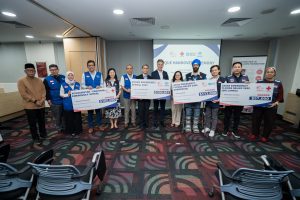
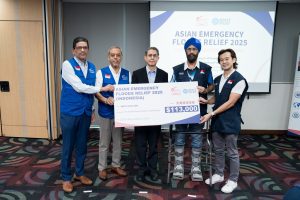
A cheque for $113,000 was presented to Mercy Relief during a handover ceremony on 18th March 2026. The funds raised will support ongoing relief efforts in Indonesia.
During the field visit
Following up, the RLAF and Mercy Relief team made their way to Sumatra for a monitoring review of the second implementation of the relief efforts in Sumatra. The RLAF team for the monitoring visit to Sumatra included Mr Zulfadhli Gazali (Board of Trustee, RLAF), Mr Adnan Abdul Hamid (CEO, RLAF) and Syaza Hazirah (Executive, RLAF).
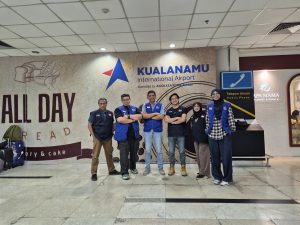
The team’s arrival at Kualanamu International Airport in Medan on 26th April 2026
Upon arrival, the team from on-ground partner, Pusat Kajian dan Perlindungan Anak (PKPA) met the RLAF and MR team at Medan. The journey began from there as they made their way to the local PKPA office located in Desa Bundar in Aceh to kickstart their agenda and discussions.
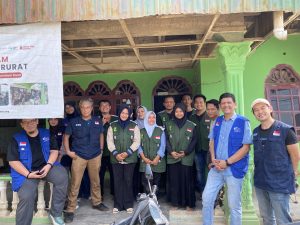
PKPA, RLAF and MR team’s visit to PKPA’s local office in Desa Bundar, Aceh Tamiang.
In the local PKPA office, the PKPA team shared on their ongoing relief efforts and current progress across various affected villages in Aceh Tamiang. Distributions of several relief items such as hygiene, shelter and educational kits are still ongoing and they have recently implemented a water, sanitation and hygiene (WASH) facility for access to clean water for the local communities’ usage. Over 20,000 individual beneficiaries were targetted to be receiving support by 10 villages across North Sumatra, West Sumatra, and Aceh.
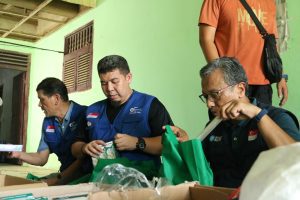
Photo taken by: PKPA
Packing of school kits by RLAF, MR and PKPA teams in preparation for distributions of relief items
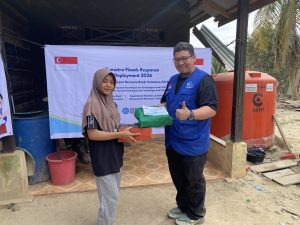
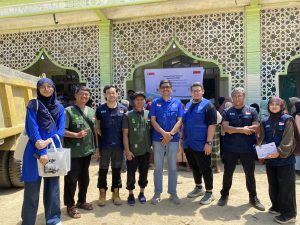
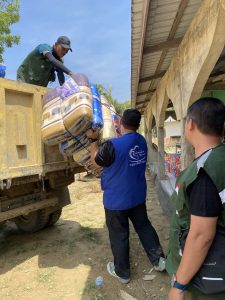
Over the next few days, the teams visited several villages across Aceh Tamiang to distribute shelter, hygiene, and school kits. Mobile health units were operated by staff from the Karang Baru Community Health Centre. It is an accredited public health centre that collaborated with PKPA on this project. The teams visited five villages (Sekumur, Tanjung Glumpang, Sulum, Juar, and Pematang Durian) to deliver ongoing relief, engage with local communities, and identify current needs and challenges as residents continue to recover and rebuild from the floods and landslides that struck last year.
 .
.  .
.  .
. 
Across all five villages visited, the main concerns raised centred on shelter, water, sanitation, hygiene, and healthcare. Although the disaster occurred last year, many areas still require support to improve the welfare and livelihoods of affected families. A number of villages continue to need further assistance to achieve sustainable and comfortable living conditions for their households.
Shelter
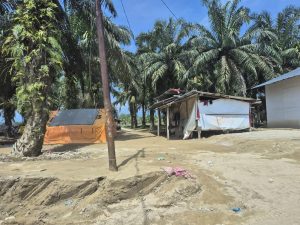
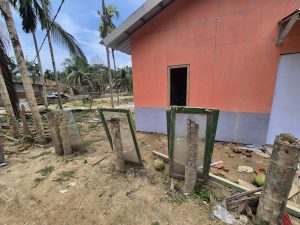
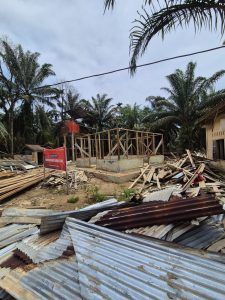
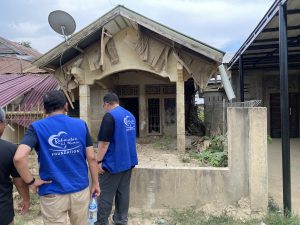
Many existing structures still showed visible flood damage (broken walls, damaged roofs, and lingering water and mud stains). Several residents shared that they had been carrying out self-repairs using debris materials salvaged from the aftermath of the floods and landslides.
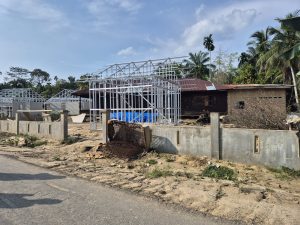
Construction of temporary shelter in Aceh
Local authorities provided temporary shelters made from lightweight boards, though some households chose to remain in tents or declined to stay in the shelters full-time due to limited ventilation, furnishings, and running water.
Water, Sanitation and Hygiene (WASH)
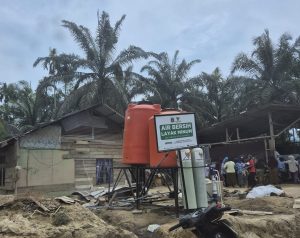
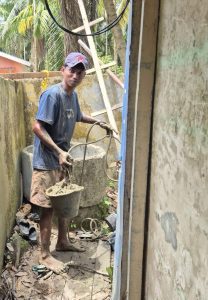
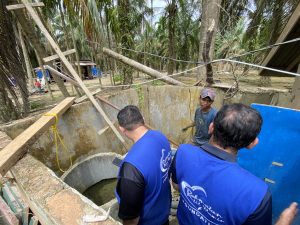
The effects of floodwaters have contaminated wells with mud and debris. The wells observed in affected villages were typically shallow and poorly constructed, resulting in reduced water flow or dry wells during hot weather. Many households relied on river water stored in communal facilities such as through their local village’s mosque.
Healthcare
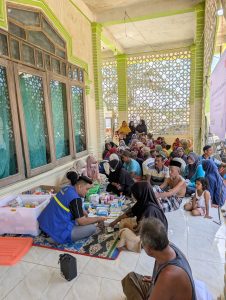
Mobile health units were operated by staff from the Karang Baru Community Health Centre — an accredited public health centre that collaborated with PKPA on this project. The mobile health unit operators reported that the floods led to an increase in common post-disaster health conditions such as skin rashes, and temporarily disrupted access to healthcare services. Specialised treatment and support for chronic illnesses remained limited within the villages due to a lack of manpower. Community hospitals are also inconvenient in terms of accessibility, which are typically located up to 1.5 hours away from the village.
Ongoing Efforts
PKPA is continuing to assess community needs and distribute relief supplies to other affected villages. Following further assessment and on-ground observations, RLAF, Mercy Relief, and PKPA will review their findings and evaluate the need for a potential next phase of implementation.
